Sunday, April 24, 2016

My Favorite's

FUN FACTS ABOUT KELSEY
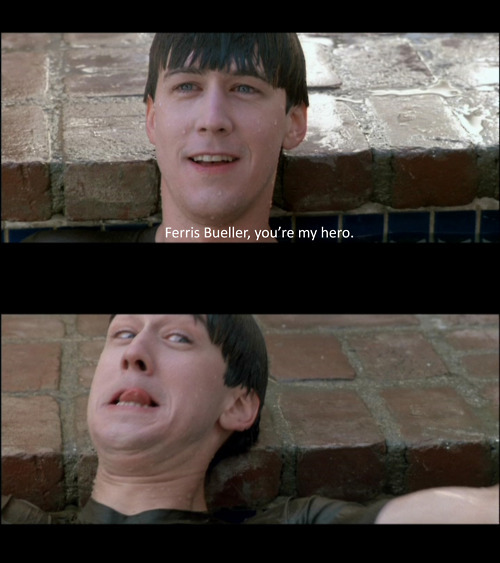
1. I love movies2. When I first watched Ferris Bueller's Day Off I knew my spirit animal at the time, and still is to this day Cameron Fry. I feel a lot of my friendships mimic Ferris and Cam's relationship. (KATIE, AMY, CHLOE)


3. The Breakfast Club. My favorite movies are eighties movies... I think it's awesome to think about how teenagers were going through some of the same things I'm going through.


4. 10 Things I Hate About You. Heath Ledger <3 

5. She's the Man. I love soccer and this movie.


6. ...

It was...
high school
 I will always remember the people I loved. 

Sunday, April 10, 2016

Witty Whitman's Writing

1. Whitman's penmanship reminds me of a slightly nicer version  of my mother's chicken scratch in the first three pages. I can barely make out a word. The third page is when

Sunday, March 20, 2016

Merica'


  1. How would you describe the "American Dream"?
    1. The "American Dream" to me is having the opportunity and ability to work hard to achieve personal success. In addition, a foreign perspective may view the American Dream as freedom, religious freedom, freedom of speech an element of American culture that draws many people to America, as well as equality, and democracy. My current "American Dream" would be to go to college and finish my degree to the fullest, and pay as little as possible. The price of everything has gone up since my parent's days. My mother's "American Dream" was to get out of her small town Georgia life. Now, she sees all of her kin and the way their lives "are all crazy", not like our undramatic city life in Raleigh. There's no cell service, no WiFi they're all disconnected from the world and deep in everyone else's business.
  2. What is your definition of wealth?
    1. Wealth, I would like to think, is the accumulation and possession of things that have intrinsic value, versus marketable value. I perceive one thing as being very valuable to me, whereas another person may only see it as its price. However, now that the cost of living is so high in America, I find that my purpose behind college, my "American Dream" is for the accumulation of money, wealth. I did not wake up one day and think I want to be in college for a third, maybe even a half of my life. I go through college just to pay off college...to pay for shelter, safety...the basic needs to survive my whole life in an expensive world.
  3. What are Americans' attitudes toward wealth and poverty?
    1. Americans want to be successful. Most people define success as the accumulation of large amounts of money to supply the needs, as well as, the wants of their lives, to live comfortably. Wealthy people have lots of money, therefore most Americans idolize them because of their success. Americans do not want to live in extreme poverty because there is the opportunity of a higher quality of life. Most think Americans are lavishly entitled and live a comfortable way of life.
  4. What is your attitude toward wealth and poverty?
    1. I think that you want to achieve an amount of wealth to live comfortably, provide for children, supply my retirement. I think being wealthy is having a lot of something; whereas being rich deals a lot more with money. I would love to be wealthy rather than in poverty. Poverty has a lot of aspects like social, political, and economical. I wish that poverty did not exist, that everyone could have equal opportunity, to achieve their own "American Dream". 

Sunday, March 6, 2016

Translation Please

1. As Gregor Samsa  awoke one morning from uneasy dreams he found himself transformed in his bed into a gigantic insect.
  • Diction:
    • "transformed"
      • more dramatic, specific to appearance
    • "insect"
      • formal/scientific word
    • "found himself"
      • no control over the transformation
  • Syntax:
    • "in his bed"
      • creates a separation between "transformed" and "gigantic insect"
  • Imagery/ Details
    • "gigantic insect"
      • creates an overwhelming visual
  • Structure:
    • lack of commas
      • the sentence is rushed because there are no commas
2. Gregory Samsa woke from uneasy dreams one morning to find himself changed into a gigantic bug.
  • Diction:
    • "Gregory"
      • more applicable to an American audience
    • "changed"
      • different than before
    • "bug"
      • informal
      • I associate "bug" with "ladybug", so to me this word has a more positive connotation than "insect".
    • "find himself"
      • his transformation was a surprise
  • Syntax:
    • Concise, logical 
  • Imagery/Details:
    • "gigantic bug"
      • I think of the movie "Honey I shrunk the kids" and how larger than life the insects were.
  • Structure:
    • Simple
3. When Gregor Samsa awoke from troubled dreams one morning he found he had been transformed in his bed into an enormous bug.
  • Diction:
    • "troubled"
      • there was a cause for his dreams
    • "he found he had been"
      • wordy, passive
  • Syntax:
    • "in his bed"
      • creates a separation 
  • Imagery/Details:
    • "enormous bug"
      • I think of the movie "Honey I shrunk the kids" and how larger than life the insects were.
  • Structure:
    • Starting with "When Gregor..." emphasizes on the him not 
4. One morning, upon awakening from agitated dreams, Gregor Samsa found himself, in his bed, transformed into a monstrous vermin.
  • Diction:
    • "agitated"
      • more negative
    • "monstrous"
      • very negative, terrifying connotation
    • "vermin"
      • very negative connotation
  • Syntax:
    • use of commas
      • separation of ideas, causes detachment
  • Imagery/Details:
    • "monstrous vermin"
      • I imagine an aggressively large insect.
  • Structure:
    • "one morning... upon awakening.."
      • seems redundant because I feel like one wakes up in the morning
Response:

I think the fourth sentence definitely creates a dramatic tone to the sentence because of the choice to use extreme, terrifying connotation "monstrous vermin" instead of the "gigantic" or "enormous" "bug" or "insect".  Also, the addition of some many commas create a dramatic pause and emphasizes the transformation as well. Whereas the second sentence I feel gets the meaning across, but fails to creates meaning because of its casual tone. This tone is also exemplified in the third and first sentence, detracting overall value of the sentence. The third sentence seems too wordy compared to the other translations to convey meaning. This I fell results in a lack of understanding of the scene for the audience. The first sentence the audience is immediately engaged into the sentence, without a formal introduction.   

Translating another language is very difficult to do because I feel like there's a loss in meaning in translation to the English language. Languages, like Spanish go further in meaning and define gender. In Mandarin there are four different tones that create four different meanings. There are different rules conveyed for each language.

Sunday, February 21, 2016

IOC

Life:


Score:
Criterion A: 7
I showed knowledge of the novel and supported my claims with evidence form the text.
Criterion B: 4
I acknowledged some literary devices within the text and commented on the effects of them on the reader.
Criterion C: 3
I felt like my commentary could've been organized differently to present a stronger coherent argument.
Criterion D: 3
I felt that my vocabulary was more informal and could have been more technical. Overall, I think my thoughts were communicated well.

Sunday, January 24, 2016

Meanwhile in Antarctica...


"Spirit Bear"

Summary:  In the TED talk "Paul Nicklen: Tales of ice-bound wonderland" Paul Nicklen, a National Geographic magazine photographer, creates awareness for endangered species and environments in remote Antarctica by telling stories of his experiences with the wildlife there. Niklen explains the environmental problems in the cold region. The glaciers are melting. This causes multiple problems within the ecosystem. Ice is home to multiple organisms, both microorganisms and large mammals. He talks about how specific organisms use the ice as a crucial pat of their lives. He talks about how his obsession with the "polar realm" and the animals that live there. He shares images of an extremely rare spirit bear as well as many other arctic species he saw along with music. Nicklen explains his fundamental goal during his time in Antarctica was to see if sea leopards were really as vicious animals as described from previous encounters with it. The first sea leopard he encounters threatens him as a defense. The sea leopard decides he is not a threat and Nicklen describes the sea leopard try to feed him by bringing Nicklen tons of penguins, the sea leopards main food source, both dead and alive to him. Nicklen concludes that sea leopards are very caring predators, he "never once had a scary encounter".

Nicklen achieves his purpose of creating global awareness for the wildlife in remote Antarctica by appealing to pathos, logos, and ethos. He does this through diction as well as the choice of music and images he uses during the slide show. Out of all the pictures he has taken, the first picture he chooses to show the audience is a spirit bear. The word "spirit" alone allows the audience to feel sympathy towards the bear because of its association to souls and religion, giving the bear a supernatural and majestic quality the audience wants to preserve. He then describes the bear as "pure white". This also leads the audience to want to help and preserve this species because of the word "pure" which is associated with authentic or classic. Nicklen also appeals to logos by comparing the lessening population of the spirit bear to the population of the panda bear, by saying "they're more rare than the panda bear". The panda is a popular endangered species and explaining that the population of the spirit bear is even less leads the audience to feel even more sympathy for this species. After his description of the bear's population and appearance he shows a slide show of  the images he photographed while in Antarctica along with song "Have You Ever", by Randy Carlyle. His choice of song appeals to pathos  through its upbeat melody it makes the audience associates feelings of happiness as it sees the serene photographs of the environment and animals in Antarctica. There are no images of vicious behavior in this slide show. Again, Nicklen appeals to pathos by describing the polar bear as "sexy" and "charismatic" and "amazing hunters" leaving the audience to associate determination and beauty with the animal. By appealing to pathos he uses humor to describe the polar bears consumption of a ring seal and the audience relates to the stuffed polar bear to when they have had a hearty meal, not like animistic, viscous, attacks of consumption. He describes many animals he observed in his journey with humanistic qualities , emotions, experiences in order for the audience to easily understand these animals without fear of them. Nicklen then goes on to compare the ice to a garden, by saying "ice is like the soil in a garden". This allows the audience to compare how important ice is in that remote ecosystem where many people never go, to a more common ecosystem most people recognize and understand. Nicklen appeals to ethos by explaining that he is not only a experienced photographer for National Geographic, but a biologist as well. He explains in detail the ecosystems with in the ice and the actions of majestic, old, rare creatures that are now facing this threat of melting ice. He repeats often that "National Geographic doesn't publish excuses" as a humor release when he is beginning to explain feelings of weariness about not finding a rare spirit bear or not getting in the water with a sea leopard. He also appeals to pathos through humor by mimicking the words and advice of his Swedish assistant with his best imitation of his accent. This makes the audience not associate the same feelings as Nicklen did when he jumped into the water with a sea leopard, like fear, but feelings of giddiness and happiness. Through diction, choices in music and photos, detailed descriptions, as well as humor Nicklen fulfills his purpose to put faces to the remote endangered wilderness as well as explain the role of ice in this ecosystem in a way in which people can understand and do something about this issue.

I chose this TED talk because there has recently been a large accumulation of ice in my community and the title has the word "ice" in it. I think Nicklen's message is hard to understand because it's hard for people to understand how big of an issue to melting of ice in these remote places of the world. He talked a lot about how some of these animals in the polar environment are perceived like the sea leopards. There is this question of good versus evil regarding the animals. Nicklen points out the good and normality of these majestic creatures instead of the evil or monstrous qualities most people only see them as. People have this sort of ignorance that global warning is not real, but Nicklen seeks to change their minds and bring attention to the issue by explaining "I'm trying to do with my work is put faces to this and I want people to understand and get the concept that if we lose ice we lose an entire ecosystem". He hope that with people's understanding will come the improvement of current conditions in these melting, remote areas of great importance to many organisms.

Sunday, January 10, 2016

"There's a speed limit in this state Mr. Neff"


The first scene shows Walter shot, sweaty, and confessing; this shows him as honorable and tough. He was not the typical male in a film noir. When we see Walter's first encounter with Phyllis we see Walter as knowledgeable, clever, and overwhelmed with her beauty. He continues to charm Phyllis by calling her "baby". His overuse of the word signifies the control and confidence he has in a situation to his audience. In the scene where he decides he is going to help Phyllis kill her husband he says, "there's not doing to be any slipper, nothing sloppy, nothing weak". This shows him as clever and tough. Also, he displays heroism because his purpose for helping Phyllis killing her husband is to save her. However, Walter displays characteristics not of the average hero. His questionable morals show as he begins a relationship with a married woman and then commits murder not once but twice. This displays his weakness for temptation. Also, Phyllis always initiates when she meets Walter besides their first encounter and manipulate Walter for her own benefit showing her control over their relationship. His trait of trustworthiness contributes to his ultimate downfall.

Walter's relationships with women are like his with Phyllis. He sweet talks women by calling them "baby" to persuade them into doing what he wants. It's ironic how he thinks he is the one in control of the relationship. He is very intelligent because he plans the thorough murder alone, but he never thought of Phyllis as the evil mastermind, only a victim and lover. He relies his love on only physical attraction. Their first encounter was when Phyllis was in a towel and their conversations never strayed from murder or insurance. We see him trust her without even getting to know her. His traits of confidence and trustworthiness make it all too easy to manipulate him.